

Cart
0

Acerola cherry is one of the richest natural sources of vitamin C ever measured, carrying many times more per gram than an orange. It is also almost impossible to buy fresh, which is why most people have never heard of the most vitamin C dense fruit on earth.
Here is what it is, why it is not in your grocery store, and what to look for if you want the real thing.

What is acerola cherry?
Acerola is a small red fruit from a shrub that grows across the Caribbean, Central America, and northern South America. It goes by a few names: Barbados cherry, West Indian cherry, or just acerola.
It is not actually a cherry. It looks like one, roughly the size of a marble with a glossy red skin, but it belongs to a completely different plant family. The taste is where the difference shows up: acerola is tart and bright, closer to a sour cherry crossed with a crabapple, with none of the deep sweetness of a Bing cherry.
The vitamin C thing
When researchers compare fruits by vitamin C density, acerola consistently comes out on top. Not marginally. By a wide margin over oranges, strawberries, kiwi, and every other fruit people usually think of as high in vitamin C.
That is the entire reason acerola has a commercial market at all. It is one of the most common natural sources used in vitamin C supplements, and if you have ever taken a "whole food vitamin C," there is a good chance acerola was in it.
Ripeness changes everything. Acerola loses vitamin C rapidly as it ripens, so fruit picked slightly underripe is actually more potent. It is one of the few foods where waiting for peak ripeness costs you the nutrient you wanted.
Why you cannot buy it fresh
This is the part that explains everything about acerola.
The fruit is extremely fragile. Once picked, it starts breaking down within a couple of days, far faster than a strawberry. It bruises if you look at it wrong. There is essentially no way to harvest it, ship it across an ocean, and put it on a shelf in edible condition at a price anyone would pay.
So the entire global acerola supply gets processed close to where it grows, almost always into frozen purée or freeze-dried powder, usually within hours of harvest. That processing is not a compromise. For acerola it is the only thing that preserves the vitamin C at all, since the alternative is a fruit that has already degraded by the time it reaches you.

What else is in it
Vitamin C dominates the conversation, but acerola also carries vitamin A in significant amounts, along with calcium, iron, and several B vitamins including niacin, riboflavin, and thiamine. It is also rich in the same anthocyanin pigments that make açaí and dark berries valuable.
Worth saying plainly: vitamin C is not a cold cure. The evidence on that is weak and has been for decades. What vitamin C genuinely does is support normal immune function, collagen production, and iron absorption, which is a less exciting sentence but a true one.
How to actually eat acerola
Your realistic options, in order of how likely you are to find them:
- Freeze-dried powder. Widely available, blends into smoothies, tastes sharply tart on its own.
- Frozen purée packs. Harder to find outside Brazilian markets, but the closest thing to the fresh fruit.
- In a finished product. Bars, juices, and supplements that use acerola as an ingredient.
- Fresh, off the shrub. Only if you live somewhere it grows, or you plant one.
If you go the product route, check where acerola sits in the ingredient list. A lot of products use a trace amount purely so they can put the word on the front of the package.
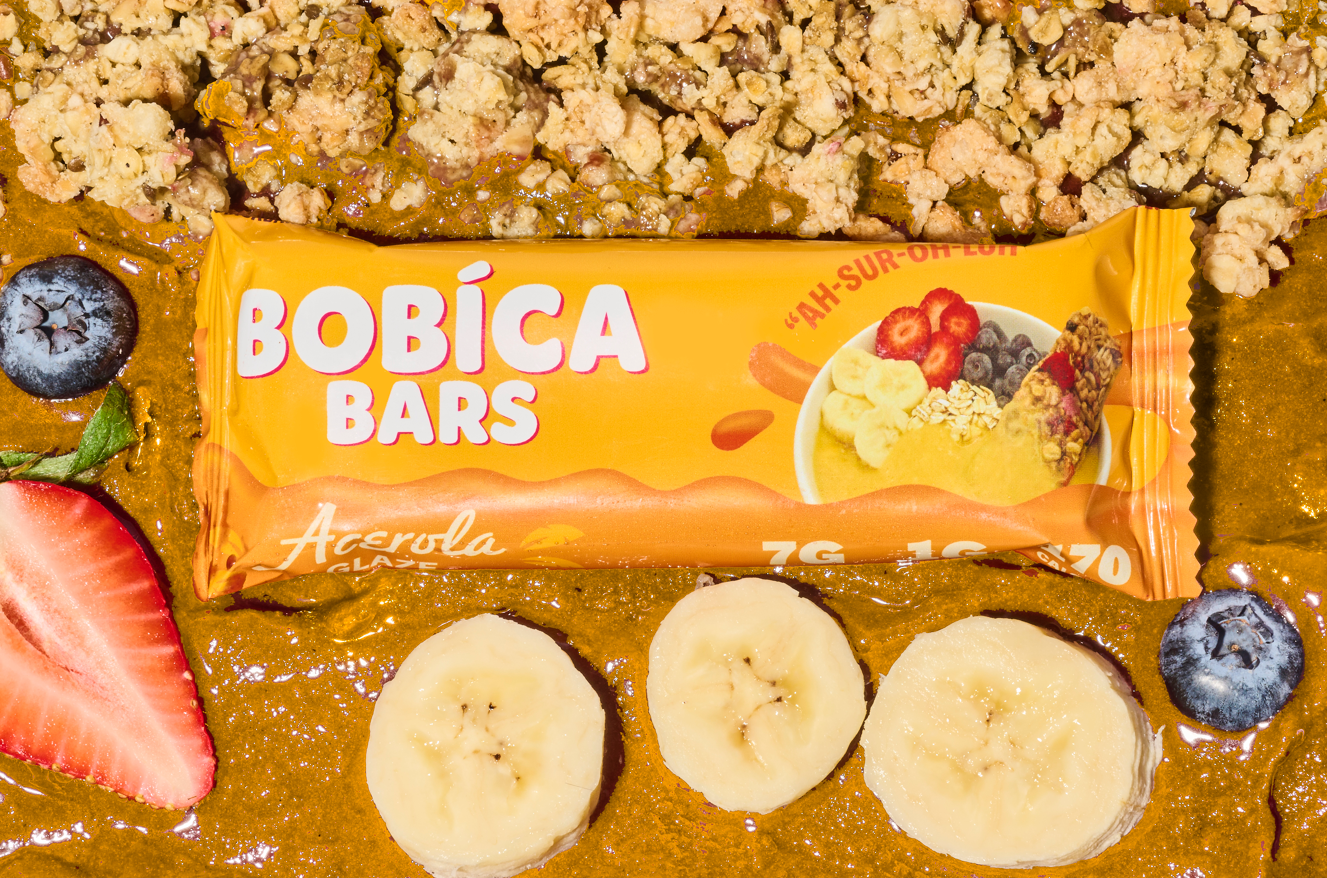
Our Acerola Cherry bar uses real acerola purée and freeze-dried acerola, and leans into the tartness rather than burying it in sugar. It is the sharpest of our three flavors, with 170 calories, 7g protein, and 1g of added sugar. If you like a sour cherry, it is the one.
Frequently asked questions
Does acerola cherry really have more vitamin C than an orange?
Yes, by a large margin per gram. Acerola is consistently identified as the most vitamin C dense fruit in comparative studies, well ahead of oranges, strawberries, and kiwi.
What does acerola cherry taste like?
Tart and bright, like a sour cherry with a slightly apple-like edge. Not sweet the way a regular cherry is.
Is acerola the same as a regular cherry?
No. It resembles one and shares the name, but it comes from an entirely different plant family and tastes noticeably more tart.
Why can I not find acerola cherries in the store?
The fruit spoils within days of being picked and bruises very easily, so it cannot be shipped fresh at any practical scale. It is processed into purée or powder near where it grows.
Is acerola powder as good as the fresh fruit?
For acerola specifically, freeze-dried powder is arguably better than what fresh fruit would be by the time it reached you, because it is processed immediately after harvest before the vitamin C degrades.

From a Bowl to a Bar
Superfood bars you can actually take with you
170 calories, 7g protein, 1g added sugar. Açaí, Pitaya, and Acerola Cherry. Gluten free, Non-GMO, OU Kosher.
Shop all three flavors
