

Cart
0
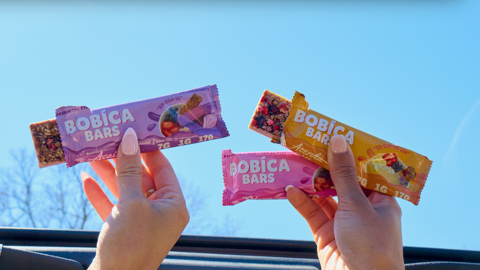

Some granola bars are healthy and some are candy bars with oats in them, and you cannot tell which is which from the front of the package. The words that sell bars are barely regulated. The panel on the back is.
Here is how to read one in about fifteen seconds, and the four numbers that actually separate a good bar from a bad one.

Why the front of the package tells you nothing
Most of the claims on the front of a bar are either unregulated or much weaker than they sound.
- "Natural" has no FDA definition for most foods. It means close to nothing.
- "Made with real fruit" can be satisfied by a trace amount of fruit purée or juice concentrate.
- "Made with whole grains" does not mean mostly whole grains.
- "No high fructose corn syrup" is true of products loaded with cane sugar, brown rice syrup, or tapioca syrup instead.
- "Superfood" is a marketing word with no regulatory meaning at all. We use it too, and you should still check the panel.
None of that is dishonest exactly. It is just that these phrases are chosen because they are permissible, not because they are informative.
The four numbers that matter
1. Added sugar, not total sugar
This is the single most useful line on the panel, and it has only been required since 2020, which is why a lot of people still do not look at it.
Total sugar includes sugar that came with real fruit. Added sugar is what the manufacturer put in. A bar with 15g total sugar and 0g added sugar is made from dates and fruit. A bar with 15g total and 12g added is mostly syrup. Same headline number, completely different food.
What to look for: under 5g of added sugar. Under 2g is genuinely rare.
2. Protein
Protein is what makes a bar hold you. Sugar and refined carbohydrate on their own move through you fast, which is why a bar can leave you hungrier than before you ate it.
What to look for: 5g or more for a snack bar. Anything under 3g is a cookie in a foil wrapper, regardless of what the front says.
3. Fiber
Fiber slows down how quickly sugar hits your system and is the reason whole fruit behaves so differently from fruit juice. It is also the nutrient most Americans fall short on.
What to look for: 2g or more. Bonus points if it comes from the actual ingredients rather than added chicory root, which can cause digestive issues in some people.
4. Where the sugar sits in the ingredient list
Ingredients are listed by weight. If any form of sugar is in the top three, sugar is a main ingredient.
Watch for the split trick: a product uses cane sugar, brown rice syrup, and honey rather than one sweetener, so each individually falls further down the list. Added together they might outweigh everything else. Sugar has dozens of names, and most of them end in "-ose" or the word "syrup."
The fifteen-second version: flip the bar over, find added sugar, find protein, and glance at the first three ingredients. If added sugar is under 5g, protein is over 5g, and sugar is not in the top three, it is a real snack.
What about allergens?
If you are buying for a kid's lunchbox or a nut-free school, this matters more than everything above.
The FDA recognizes nine major allergens: milk, eggs, fish, shellfish, tree nuts, peanuts, wheat, soybeans, and sesame, which was added in 2023. Most granola bars contain at least two of them, usually tree nuts and wheat, and many are made on shared equipment even when the recipe is clean.
Two things to check, because they are not the same:
- The ingredient list tells you what is in the bar.
- The "may contain" or "made in a facility with" line tells you what might have touched it. For a serious allergy this line matters as much as the ingredients.

Where our bars land
We would rather show you the numbers than tell you we are healthy.
- 170 calories per bar
- 7g protein
- 2g fiber
- 4g total sugar, 1g added sugar
- Free from all nine major allergens, plus gluten free, Non-GMO, and OU Kosher
The base is rolled oats, tapioca syrup, and pea protein, with real fruit purée and freeze-dried fruit doing the flavor work. Run our panel through the four checks above and it passes all four, which is the whole reason we built it the way we did.
You can see the full ingredient list on any of the three flavor pages: Açaí Glaze, Pitaya, or Acerola Cherry.
Frequently asked questions
Are granola bars good for weight loss?
They can help as a controlled-portion snack that keeps you from overeating later, but only if the bar has enough protein and fiber to be filling. A low-protein, high-sugar bar tends to increase hunger rather than reduce it.
How much sugar should a granola bar have?
Look at added sugar rather than total. Under 5g of added sugar is a reasonable ceiling for a snack bar. Total sugar can run higher when it comes from dates or real fruit.
Are granola bars a good breakfast?
On their own, most are too light. A 170 to 250 calorie bar works better alongside yogurt, fruit, or eggs than as the whole meal.
Is a granola bar healthier than a protein bar?
Neither category is automatically better. Protein bars generally have more protein and often more sugar alcohols; granola bars generally have more added sugar. Read the panel rather than the category name.
What are the nine major food allergens?
Milk, eggs, fish, shellfish, tree nuts, peanuts, wheat, soybeans, and sesame. Sesame was added to the FDA list in 2023, so packaging printed before then may not call it out.
From a Bowl to a Bar
Superfood bars you can actually take with you
170 calories, 7g protein, 1g added sugar. Açaí, Pitaya, and Acerola Cherry. Gluten free, Non-GMO, OU Kosher.
Shop all three flavors