

Cart
0

If your kid's classroom is nut-free, half the snack aisle just got crossed off your list. Most granola bars, trail mixes, and protein bites are built on peanuts, almonds, or cashews, and plenty of the ones that are not still carry a "may contain" warning.
Here is how to pack a lunchbox that follows the rules, actually keeps your kid full until pickup, and does not turn every morning into a label reading session.
Why so many schools go nut-free
Peanut and tree nut allergies are among the most common food allergies in kids, and they are also among the most likely to cause severe reactions. Unlike some childhood allergies, they are often lifelong.
A classroom full of young kids is a hard place to control. Hands touch everything, snacks get traded, and a smear of peanut butter on a desk can be enough to cause a reaction in a highly sensitive child. Nut-free rules are not about being dramatic. They are the simplest way to protect the one or two kids in the room who could end up in the ER.
Check the actual policy. "Nut-free" means different things at different schools. Some ban peanuts only, some ban all tree nuts too, and some extend it to anything made in a facility that handles nuts. Ask the teacher or nurse which version you are dealing with before you shop.
How to read an allergen label in ten seconds
US food labels give you three places to look, and they do not all mean the same thing.
1. The ingredient list
This tells you what was intentionally put in the food. Scan for peanuts and for any tree nut by name: almonds, cashews, walnuts, pecans, pistachios, hazelnuts, macadamias, and so on. Nut butters, nut flours, and nut oils count.
2. The "Contains" statement
Right under the ingredients, most packages have a line like "Contains: Milk, Wheat, Peanuts." This is the fast version. It covers the nine major allergens the FDA requires companies to disclose: milk, eggs, fish, shellfish, tree nuts, peanuts, wheat, soybeans, and sesame.
3. The "May contain" or "Made in a facility with" line
This is the one that trips people up. These precautionary statements are voluntary. There is no federal standard for when a company has to use one, which means two products made under identical conditions can have different labels. A missing warning is not a guarantee, and a present one does not always mean high risk.
For a school with a strict policy, or a kid with a serious allergy, treat any "may contain nuts" product as off the list.
Easy nut-free lunchbox swaps
Nut-free does not have to mean boring or low in protein. A few simple trades:
- Peanut butter sandwich: swap in sunflower seed butter. Same texture, similar protein. Heads up: it can turn slightly green when baked into things, which is a harmless reaction and not spoilage.
- Trail mix: build your own with pumpkin seeds, sunflower seeds, dried fruit, and a few chocolate chips. Check the chocolate label, since a lot of it is made on shared lines with nuts.
- Nut-based granola bars: look for bars built on oats and seeds, or plant protein like pea protein, rather than almonds or peanuts.
- Protein bites: roasted chickpeas, cheese sticks, hummus with pretzels, or hard boiled eggs, depending on what else your school restricts.
- Something sweet: fresh fruit, applesauce pouches, or yogurt tubes freeze well and double as an ice pack.

What makes a snack actually filling
Kids burn through a sugary snack fast, then crash right in the middle of the afternoon. The fix is the same one we cover in how to read a granola bar label: look for protein and fiber, and keep added sugar low.
A rough target for a packaged school snack:
- Protein: 5g or more
- Fiber: 2g or more
- Added sugar: under 5g
Most kid snacks miss on at least one of those. Fruit snacks and many "kids" granola bars are mostly added sugar with almost no protein.
Where our bars fit
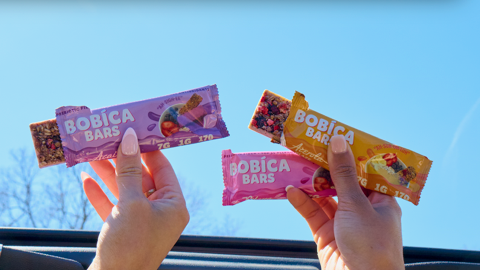
We built Bobica Bars to be the thing you can throw in any lunchbox without checking the school handbook first.
- Free from all nine major allergens, including peanuts and tree nuts
- 7g protein from pea protein, not nuts
- 2g fiber and 1g added sugar
- 170 calories, individually wrapped, and they hold up in a backpack
The base is rolled oats, tapioca syrup, and pea protein, with real fruit doing the flavor. Kids usually go for Pitaya first because it is bright pink, and Açaí Glaze is the safest bet for picky eaters. Acerola Cherry is the tart one, so save it for the kid who likes sour candy.
As always, if your child has a severe allergy, check the full label and talk to your allergist about what is right for them.
Frequently asked questions
Is sunflower seed butter safe for nut-free schools?
In most cases, yes. Sunflower seeds are not peanuts or tree nuts. Some schools still ask parents to label sunflower butter sandwiches, since it looks just like peanut butter and staff cannot tell the difference at a glance.
Are seeds considered nuts?
Generally no. Sunflower and pumpkin seeds are not on the tree nut or peanut list. Sesame is a seed, but it is now one of the nine major allergens, so check whether your school restricts it.
What does "made in a facility with tree nuts" mean?
It means the product was made somewhere that also handles tree nuts, so cross-contact is possible. These warnings are voluntary in the US, so most nut-free schools treat them as off limits.
What is a good high protein nut-free snack?
Cheese sticks, hard boiled eggs, roasted chickpeas, Greek yogurt, sunflower seed butter, and bars made with pea or other plant protein instead of nuts.
Are Bobica Bars nut-free?
Yes. Bobica Bars are free from all nine major allergens, including peanuts and tree nuts. The protein comes from peas.
From a Bowl to a Bar
Superfood bars you can actually take with you
170 calories, 7g protein, 1g added sugar. Açaí, Pitaya, and Acerola Cherry. Gluten free, Non-GMO, OU Kosher.
Shop all three flavors
